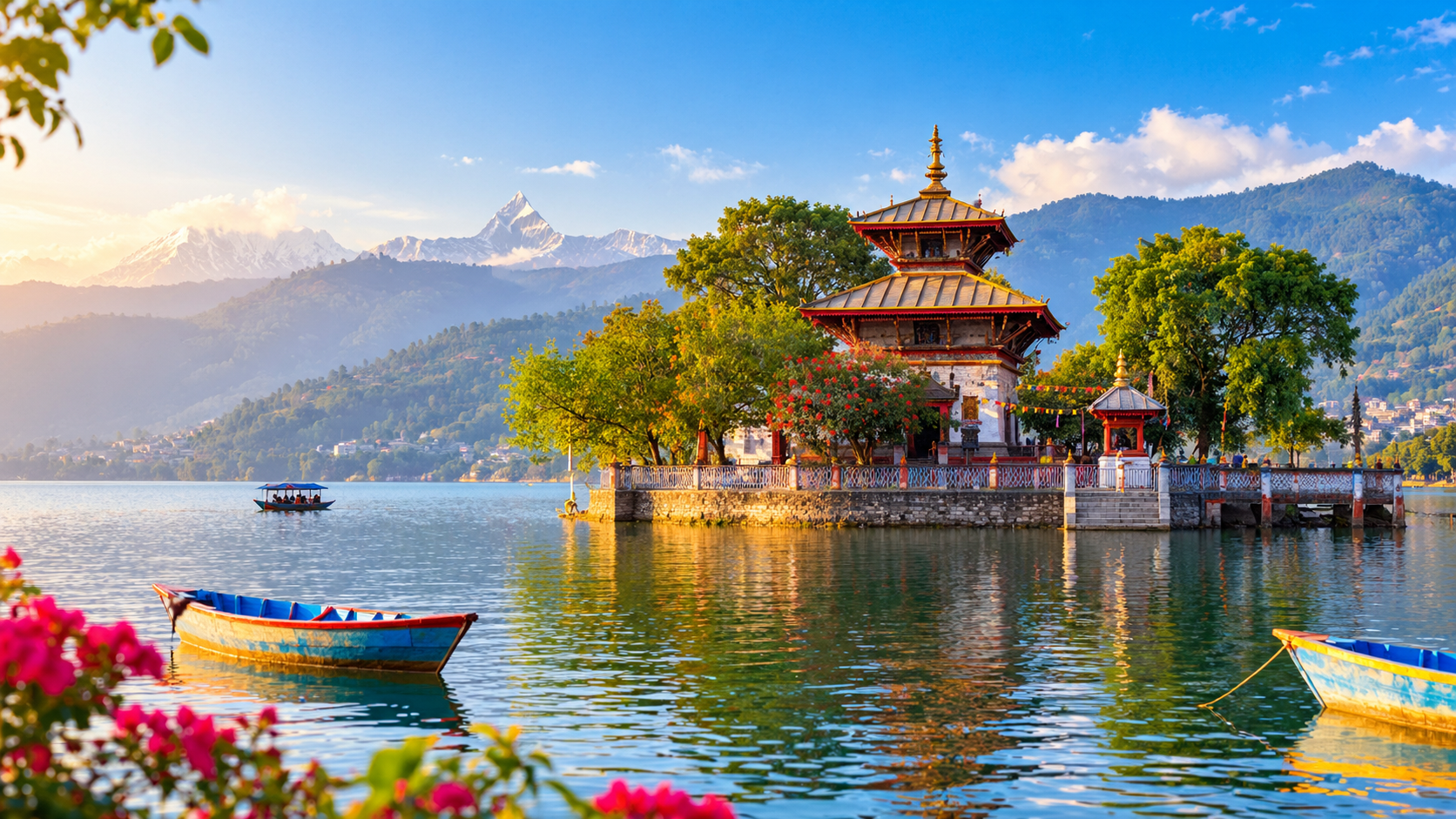
There are more photogenic spots in Pokhara, but few carry the religious weight of Tal Barahi Temple. Sitting on a small island in the middle of Fewa Lake, this two-storey pagoda is considered the most important Hindu religious monument in the city. The only way to reach it is by boat, which keeps the visit unhurried and the island surprisingly serene given how close it sits to the busy Lakeside strip.
The Goddess Barahi
“Tal” means lake in Nepali, so the full name translates simply as “the Barahi of the lake.” The goddess Barahi is understood as a fierce manifestation of Durga — a protector figure associated with strength and prosperity. In Hindu tradition she also represents Ajima, the divine feminine principle. Devotees come here to offer prayers for protection, success in business, and safe travel, which may explain why the temple draws not just local pilgrims but people from across western Nepal.
Pilgrimages are heaviest during two periods of the Nepali calendar: Baisakh (April–May) and Kartik (November–December). The Dashain festival, which falls in September or October, also brings elevated activity to the temple.
The Building
The temple was constructed in the 18th century in traditional Nepali pagoda style, using stone and wood on a small artificial island platform. The building rises two storeys with a thatched roof design, following conventions typical of the Newari architectural tradition. It is compact — the island itself is small — but it holds a main sanctum and space for several people to worship at once.
The building was renovated in recent years; the structure visitors see today is in good condition.
Getting There
From Phewa Ghat in Lakeside, there are two ways to reach the temple by boat.
Barge (public shared boat): Costs 100 NPR return per person. This is the most economical option. Note that boatmen sometimes attempt to charge more or direct passengers toward private boats; ask other passengers already on the barge for guidance if you encounter resistance. The boat crossing takes about five minutes.
Private paddle or row boat: Runs approximately 600 NPR for a temple-only trip. If you want to extend your time on the lake — drifting toward the World Peace Stupa shoreline or stopping for photographs — private rental runs around 1,500 NPR per hour with a boatman. You can ask to stop at Tal Barahi as part of a longer lake route.
Life jacket: Rental is mandatory (20–30 NPR) on the shared barge. Private boat operators also provide them.
Temple entry: Free.
What to Expect on the Island
The island is small enough to walk around in a few minutes. Most of the visit is spent at or near the main temple, where priests perform pujas throughout the day using flowers, rice, and incense. Visitors can observe the ceremony from a respectful distance.
The island also has one of the better views of the Annapurna range across the lake. On clear winter mornings, the mountains reflect in the water — this is one reason private boats are popular with photographers, who tend to visit at sunrise or late afternoon.
Allow about 30 minutes for the full visit including the boat journey.
Temple Etiquette
- Remove shoes before entering the inner sanctum.
- Dress modestly — avoid bare shoulders and shorts.
- Move clockwise around the shrine, as is standard in Hindu worship.
- Ask before photographing any active puja ceremony; photographing the exterior and lake views is generally fine.
- Avoid visiting on Saturdays if you dislike crowds; the temple is busy on the Nepali day of rest.
When to Visit
Early morning (6–9 AM): Quietest on the water and the best light for mountain photography.
Late afternoon (4–6 PM): Sunset timing over the lake, and often softer crowds than midday.
Avoid: Saturdays and major festival days unless you specifically want to experience the pilgrimage atmosphere, which is busy but culturally interesting.
Combining Visits
A Fewa Lake boat hire to the World Peace Stupa on the southern hill can include a stop at Tal Barahi without any significant extra cost or time. Ask the boatman before departure and agree on the price for both stops. The temple also makes a natural pairing with Lakeside itself — the ghat (boat landing) is within easy walking distance of the main restaurant and hotel strip